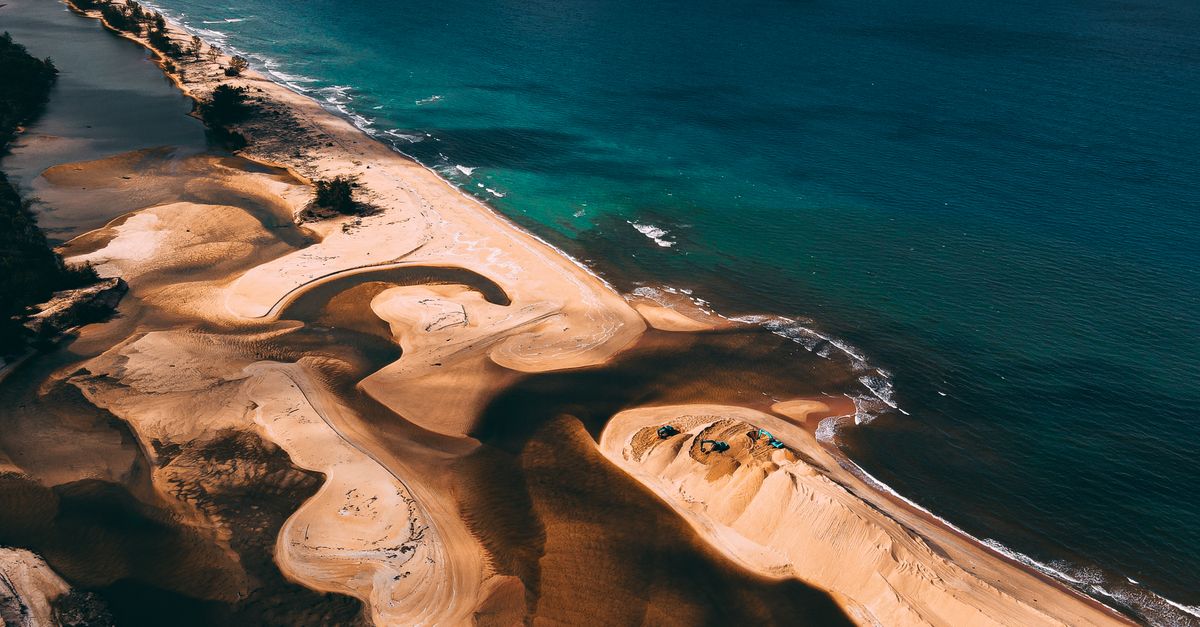
American Beach is a small historic oceanfront neighborhood on the south end of Amelia Island, in Nassau County, Florida, made up of mid-century cottages, a few newer homes, and a number of vacant residential lots. Prices here are driven by scarce land, tangled heirs' property titles, and a federal nature preserve that limits what can be built, not by square footage. You are buying into a quiet, slow-moving market, not a resort.
Drive the south end looking for it and you can pass through twice without knowing. There is no big sign, no gate, no guardhouse. A few quiet streets of cottages, some empty lots gone back to scrub oak, and a dune the size of a small mountain that a stranger will mistake for a hill in the road. The place does not announce itself, which is the first thing to understand about it.
What is American Beach, and why does it cost what it costs?
American Beach was founded in the 1930s by A.L. Lewis, the first Black millionaire in Florida, and the Afro-American Life Insurance Company of Jacksonville, as a beach community on the Atlantic. Today its prices run on supply, not size. The buildable land is scarce, much of it held by families for three generations who are in no hurry to sell, and a good share of it carries title knots that take months to untie.
For a few decades it was a working resort, the kind of place that drew folks down for the summer with music and crowds to match. A hurricane in the 1960s knocked it about. The grand part faded; the neighborhood stayed. That is the inheritance you walk through on those lots today. When a parcel does come up, it tends to sell slow and sell on its land, because there is not much of it and the people who hold it know that.
What is NaNa, the dune at the south end?
NaNa is one of the tallest sand dunes in Florida, a great ridge held together by live oak and palmetto at the south end of the island, and the National Park Service folded a chunk of American Beach, NaNa included, into the Timucuan preserve. In plain terms, that hill is not going anywhere, and neither is anything you might have wanted to build too close to it.
For a buyer this shows up in dollars. A protected dune and a federal preserve next door mean some lots cannot be built on the way you picture, and the rules about how close a foundation sits to that sand are not suggestions. I have watched more than one buyer fall for a view and forget to ask what stands between the lot line and the water. On a barrier island, that sand is usually the only thing keeping a house dry. Ask first. Fall in love second.
What do the lots and cottages actually look like?
Walk Lewis Street or Gregg Street on a weekday and you see the real shape of the place: cinderblock cottages from the fifties, some kept up like Sunday clothes and some leaning on their memories, a few newer two-story homes where an old lot finally changed hands, and overgrown empty parcels that look like nothing until you learn they are some of the most fought-over dirt on the island. Here is roughly what you are choosing among:
| Property type | What it is | The catch |
|---|---|---|
| 1950s cottage | Small cinderblock home, original footprint | Age, condition, flood insurance |
| Newer infill home | Two-story build on a converted lot | Higher price, fewer of them |
| Vacant lot | Buildable or preserve-bound parcel | Setbacks, dune rules, preserve line |
| Heirs' property | Land passed down without a clean will | Slow, tangled title; many owners |
That last row is the whole game. A lot of American Beach land is heirs' property, passed down without a clear will and owned by a dozen cousins who have never all been in the same room. A clean chain of title is the difference between a closing and a heartache. This is not a market for the buyer who wants to wire money on Friday and grill on Saturday. It rewards the one who can sit on the porch a while.
It is worth remembering what surrounds it, too. Five minutes north sits a famous resort with its golf and its guardhouses. American Beach runs right up against all that and stays its own small self, which is a large part of the appeal. A neighborhood that kept its own name while a billion dollars of development grew up on its fence line is not a thing you can manufacture.
What should a careful buyer do before making an offer?
Start with the survey and the title, not the listing photos. Confirm whether a lot is buildable under Nassau County setbacks and the dune rules, and whether any of it sits inside the Timucuan preserve boundary. Learn the flood zone and what the insurance runs, because this is the Atlantic side of a barrier island and the wind has opinions. The order matters: ownership and buildability first, paint colors last.
If you want the history, the A.L. Lewis Historical Society keeps a small museum on the beach. And get someone local who has actually closed deals on this end of the island, where heirs' property and preserve lines turn an ordinary transaction into a long conversation. At Salt Harbor Real Estate we read these particular streets slowly, because the fast way through American Beach is usually the way that ends at a title problem nobody saw coming.
The fellow who drove past it twice did buy a cottage there in the end. It took him the better part of a year to untangle the lot next door he wanted to add. He says now he would not trade it for the prettiest new build behind any gate on the island. A beach you have to slow down to find tends to be the one you stop looking past.
Frequently asked questions
Where is American Beach on Amelia Island?
American Beach sits on the south end of Amelia Island in Nassau County, Florida, along the Atlantic. It runs right up against a large gated resort to the north but stays a separate, low-key neighborhood of cottages and vacant lots.
Why is American Beach real estate expensive for what it is?
Prices are driven by scarce land, not square footage. Much of the buildable land is held by families across three generations who rarely sell, and a federal nature preserve plus protected dune limit what can be built on some lots.
What is NaNa dune and how does it affect building?
NaNa is one of the tallest sand dunes in Florida, on the south end of Amelia Island, and part of American Beach including NaNa is inside the National Park Service's Timucuan preserve. Some lots near it cannot be built on as a buyer might imagine, and setback rules from the dune are strict.
What is heirs' property and why does it matter here?
Heirs' property is land passed down without a clean will, often owned jointly by many descendants. A lot of American Beach land is held this way, so confirming a clear chain of title can take months and is the main reason these deals move slowly.
What should I check before buying a lot at American Beach?
Start with the survey and title, confirm whether the lot is buildable under Nassau County setbacks and dune rules, and check whether any of it falls inside the Timucuan preserve boundary. Then verify the flood zone and insurance cost, since it is the Atlantic side of a barrier island.