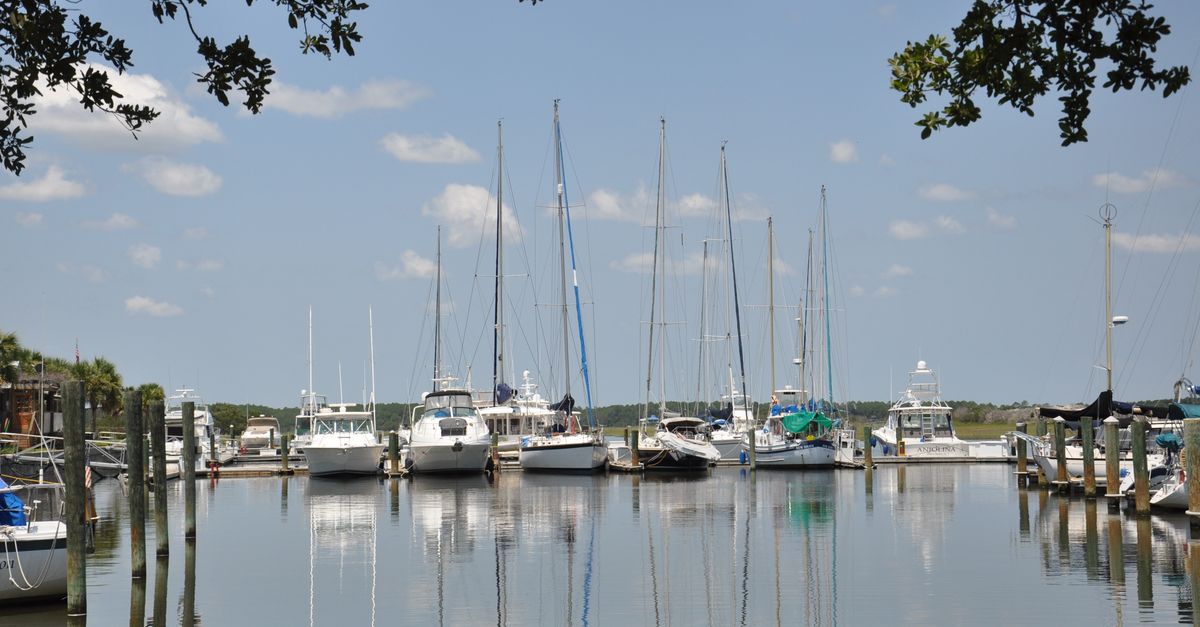
Yes, for most buyers Fernandina Beach is a good place to live, as long as you can absorb island home prices and a hurricane season. The draw is a walkable Victorian downtown that sits a few blocks from 13 miles of Atlantic beach. The cost of that draw is flood insurance you have to shop carefully for, and a stretch of summer when the bridge clogs with day-trippers.
I've watched buyers fall for the place in a single afternoon, usually somewhere between a shrimp boat unloading at the docks and a sunset over the marsh. The town earns that reaction. Living here full time is a different contract than visiting, though, and a few of its terms surprise people.
What is daily life like in the historic district?
Daily life runs on a 50-block historic district where you can walk from a 19th-century cottage to the harbor and a coffee shop without moving your car. The pace is slow on purpose. A working shrimp fleet still ties up downtown, and the two paper mills on the north end run around the clock.
Centre Street is the spine, brick pavers and Victorian storefronts running down to the water, with restaurants that stay open year-round instead of only for the season. Egan's Creek Greenway gives you several miles of marsh trail inside the city limits, and Fort Clinch sits at the north tip with some of the cleanest beach around. The calendar stays full of local events, from the Saturday farmers market downtown to the Isle of Eight Flags Shrimp Festival that floods Centre Street every May. This is a small town, though. The nearest trauma center and major airport are in Jacksonville, 35 minutes south, and you feel that distance on a bad day.
How good are the public schools?
The public schools are strong. Nassau County School District holds an A rating from the Florida Department of Education, the state's top district grade. If schools factor into your decision, that grade is one of the few things here that isn't a judgment call.
FLDOE grades districts on an A-to-F scale built mostly on standardized test performance, graduation rate, and student learning gains. An A district doesn't mean every campus is identical, so pull the individual school grade for the zoned address before you commit. The district also runs far fewer schools than a metro system, which means less choice and shorter bus rides.
How much does it cost to live here?
Living here costs more than the Florida average. The median home sale price was around $585,000 in 2025, above the statewide median, and in-town historic or waterfront homes run higher. Property taxes in the county are moderate, but windstorm and flood insurance on an island address is the line item that catches newcomers off guard.
Where you buy changes the math more than anything else. The biggest split is in-town versus the mainland.
| Where you buy | What you trade |
|---|---|
| Historic district, in town | Walk to dinner and the harbor; older homes, smaller lots, top of the price range, more maintenance |
| Yulee, on the mainland | Lower prices, bigger lots, newer construction; a bridge and 15 to 20 minutes between you and the beach |
A chunk of the housing here is second homes and short-term rentals, which keeps prices firm and long-term rentals tight, so if you're renting before you buy, start that search early. Groceries and gas run a little above the regional average, since almost everything crosses the bridge to get here. Utilities are ordinary. The premium you pay is mostly for location and for historic housing stock that is charming and old enough to need a real maintenance budget. When buyers ask us at Salt Harbor whether to chase a cottage in town or more square footage off the island, the deciding question is usually simple: do you want to walk to the harbor, or do you want the garage and the lower payment?
What are the real downsides?
The main downsides are seasonal traffic and the cost of insuring an island home, plus an industrial waterfront most visitors never notice. From spring break through Labor Day, downtown parking vanishes and the bridge backs up with beach traffic. Two kraft pulp mills run on the north end, and on certain wind days they push a sulfur smell across parts of town. Hurricane prep is a yearly given.
That mill smell is local shorthand for "the smell of money," since the mills are among the county's largest employers, but it's a real factor if you're sensitive to it, so spend a few days here on different wind before you buy. For the full safety picture, including crime numbers, rip currents, and evacuation routes, see our separate read on whether the area is safe. And if your real question is whether to move to the island at all rather than into this particular town, our piece on living on Amelia Island weighs the whole-island trade-offs.
Before you commit, drive over the bridge with the window down. If the low-tide marsh (pluff mud and salt, with a thread of sulfur off the mills) reads as "home" instead of "what is that smell," you've found your place. If it reads as a deal-breaker, no school grade or stretch of beach is going to fix that.
Frequently asked questions
Is Fernandina Beach a wealthy area?
Relatively, yes. The median home sale price was around $585,000 in 2025, above Florida's statewide median, and household incomes run above the state average. It isn't uniformly affluent, though, with prices ranging widely between the historic district, newer island subdivisions, and the mainland in Yulee.
Is Fernandina Beach prone to flooding?
Yes. As a low-lying barrier island, much of the area sits in FEMA-designated flood zones, and lenders require flood insurance for properties there. Storm surge and heavy rain during hurricane season are the main risks, and elevation varies block to block, so check the flood zone for any specific address.
How good are the schools in Fernandina Beach?
Nassau County School District, which serves the area, holds an A rating from the Florida Department of Education, the state's highest district grade. Individual school grades vary, so check the specific zoned campus before choosing an address.
Is Fernandina Beach a city or a small town?
It's a small coastal city of roughly 13,000 residents and the only incorporated city on Amelia Island. The 50-block historic district is one of the largest in Florida, anchored by Centre Street and a working shrimp harbor.