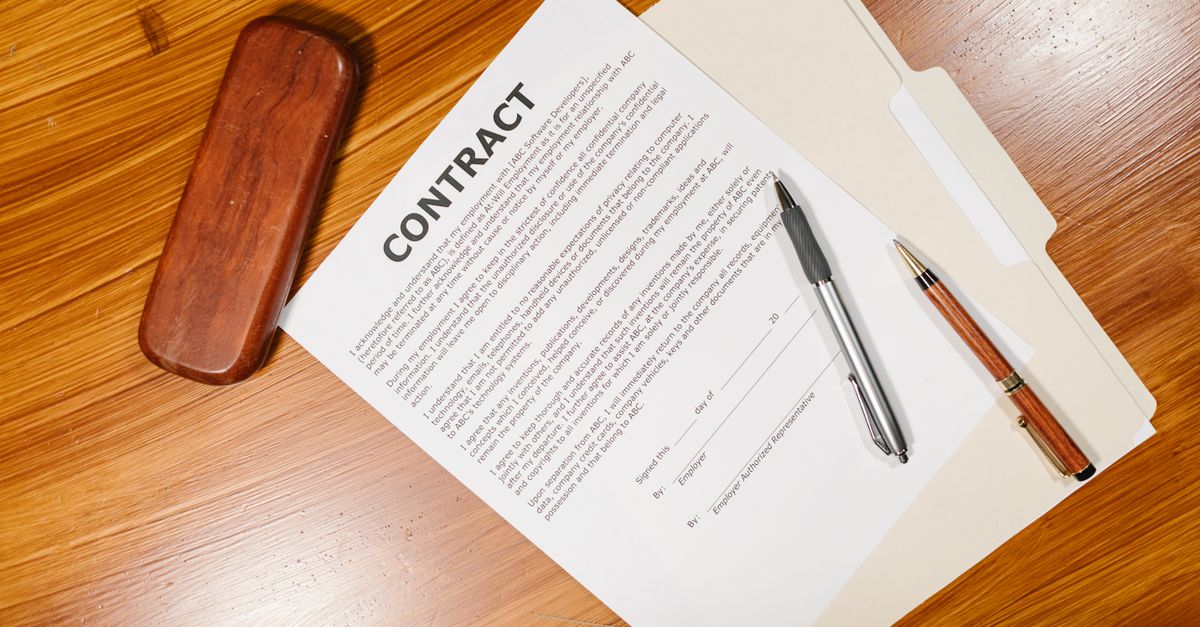
A written listing agreement must not have an automatic renewal clause. It needs a definite expiration date the contract reaches on its own, with no language that quietly rolls it over, extends it, or keeps it alive until the home sells. It also must not be signed with blank spaces, an open-ended term, or the broker's commission left unstated. In Florida, an exclusive listing that renews itself, or never ends at all, is not a valid one.
I once watched a seller realize, standing in their kitchen in March, that the agreement they signed the previous spring had quietly carried them through a full year and an entire hurricane season because nobody read the renewal line. The house was fine. The irritation was real. A listing agreement is a short, plain document, and the lines that bite are almost always the ones everybody skims.
Why can't a listing agreement renew itself?
Because Florida law requires an exclusive listing to carry a definite expiration date and bars clauses that renew the agreement automatically. A self-renewing listing would roll forward on its own, committing the seller again without their say, which is the exact outcome the rule exists to stop. The agreement has to end on a date you can point to, then actually stop.
Your broker is free to ask you to extend, or to sign a fresh agreement, once the term runs out. That conversation is normal. What the rules don't allow is the contract extending itself by default while you assume you walked away months ago. Chapter 475 of the Florida Statutes, the chapter that governs real estate licensees here, puts the duty to write it correctly on the agent, so a self-renewing listing isn't only bad for you. It's a discipline problem for the licensee who drafted it, which is one reason a careful agent won't put one in front of you in the first place.
What makes an expiration date "definite"?
A definite expiration date is a specific calendar day written into the agreement, like September 30. "Until the property sells," "renewable monthly," or a window anchored to no real start date do not count. If you can't read the document and name the exact day your obligation ends, the term isn't definite, and that's worth fixing before you sign, not after.
Pick the end date with your real timeline in mind. Buyer traffic on the island thins out between Thanksgiving and the new year, then picks back up as the spring showing season arrives, so a 90-day term starting in October lands very differently from one starting in March. A turn-of-the-century frame house in the historic district can take longer to find its buyer than a newer build out toward Yulee, which is a real reason to set a longer term on purpose. None of that is the broker's call by default. It's a number you choose, and you should choose it knowing the season and the house.
What else doesn't belong in a listing agreement?
Past the renewal trap, a few things should never make it onto a signed listing agreement:
- Blank spaces. Don't sign a contract with empty lines for someone to fill in later. Every blank gets completed before your signature, not after.
- A vague commission. The fee, and who pays it, belong on the page in plain numbers, never left as "to be determined."
- The wrong listing type by accident. An exclusive right to sell, an exclusive agency, and an open listing each pay the broker under different conditions. Make sure the one you signed is the one you meant.
- Side terms that live only in conversation. If a promise about staging, photography, or a price drop matters to you, it goes in writing. If it isn't on the page, it doesn't exist.
What must a valid listing agreement have?
A valid written listing agreement has the names of the seller and broker, a description of the property, the list price and terms, the broker's compensation, the type of listing and the scope of the broker's authority, a definite expiration date, and the seller's signature. Leave one out and you have a weaker document, not a stronger handshake.
When we take a listing at Salt Harbor Real Estate, we read the expiration date and the commission line out loud with the seller before a pen comes out, because those two lines cause most of the surprises months later. It costs a minute and it has saved more than one spring from a March kitchen conversation like the one above.
One last distinction worth keeping straight. The listing agreement is the contract between you and your broker. The contract you'll later sign with a buyer is the FAR/BAR purchase contract, a separate document with its own inspection, financing, and title timelines. And if you're wondering whether you can change your mind and walk away once a buyer is under contract, that's a different question, with a much narrower answer for sellers than most people expect.
Frequently asked questions
What must a written listing agreement not have?
It must not have an automatic renewal clause, blank spaces filled in after signing, an open-ended term with no real end date, or an unstated commission. In Florida, an exclusive listing also has to carry a definite expiration date and cannot renew itself.
What must all listing agreements have?
The names of the seller and broker, a description of the property, the list price and terms, the broker's compensation, the type of listing, a definite expiration date, and the seller's signature. Missing one of these weakens the agreement.
Does a listing agreement have to have an expiration date?
Yes. In Florida, an exclusive listing must have a definite expiration date, a specific calendar day the agreement ends on its own. 'Until it sells' or an automatically renewing term does not satisfy that requirement.
Can a listing agreement renew automatically?
No. Florida law prohibits automatic renewal clauses in exclusive listing agreements. Your broker can ask you to sign an extension or a new agreement, but the contract cannot extend itself without your agreement.